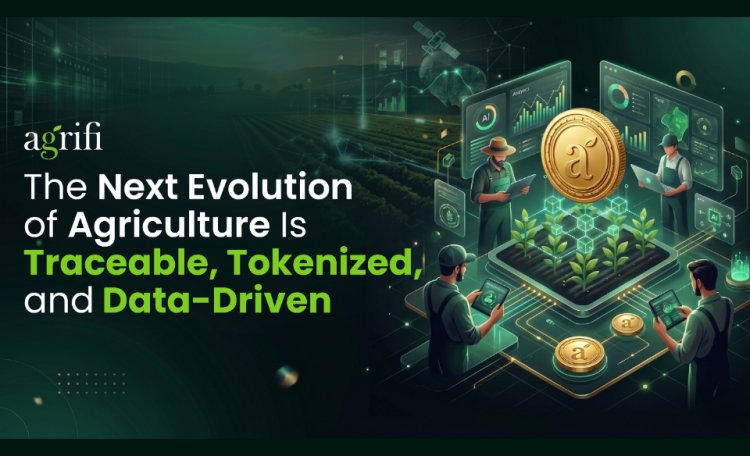
The Next Evolution of Agriculture Is Traceable, Tokenized, and Data-Driven
Explore how AI, blockchain, IoT, digital twins, and tokenization are transforming agriculture into a connected, transparent, and data-driven industry. Learn why agriculture may become one of the most important Real-World Asset sectors in Web3.
For decades, farming systems were primarily measured by land, labor, machinery, and production output.
Today, an entirely new layer is reshaping the industry: data infrastructure.
Across global markets, agriculture is rapidly becoming more connected, traceable, predictive, and digitally integrated as technologies such as blockchain, artificial intelligence, IoT systems, satellite intelligence, and real-time analytics move deeper into food production ecosystems.
The timing of this shift is critical.
According to the Food and Agriculture Organization (FAO), global food demand could increase by nearly 70% by 2050 as population growth accelerates worldwide.
At the same time, climate instability, supply chain disruptions, rising logistics costs, food fraud concerns, and water scarcity are placing increasing pressure on agricultural systems globally.
In parallel, consumers, regulators, distributors, and retailers are demanding greater visibility into how food is produced, transported, monitored, and verified.
This growing demand for transparency is exposing one of the agriculture industry's biggest long-standing challenges: fragmented infrastructure.
Many agricultural ecosystems still operate through disconnected systems where:
• Supply chain visibility is limited
• Farm-level data remains siloed
• Traceability is inconsistent
• Verification processes are manual
• Operational monitoring is delayed
• Food origin transparency remains incomplete
As global food systems become increasingly complex, traditional infrastructure models are struggling to keep pace.
This is why agriculture is beginning to evolve beyond traditional farming and into a technology-driven intelligence ecosystem.
Agriculture Is Becoming a Real-Time Data Industry
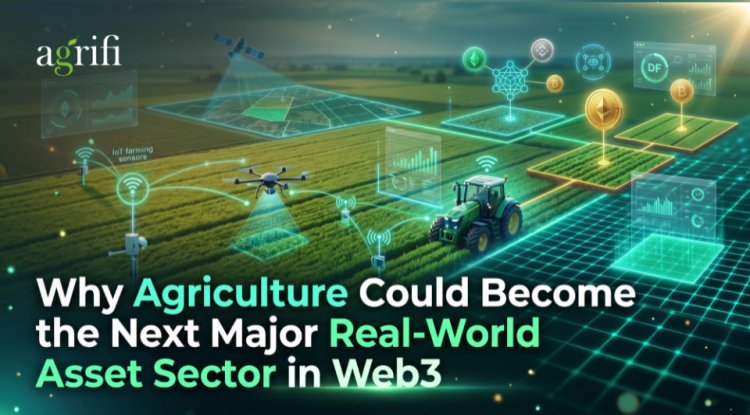
Modern farms are no longer operating solely through seasonal observation and manual processes.
They are increasingly powered by:
• IoT soil monitoring systems
• AI-powered yield prediction
• Drone surveillance and imaging
• Weather intelligence platforms
• Satellite crop analytics
• Automated irrigation technologies
• Blockchain-backed verification systems
Together, these technologies are transforming agriculture into a continuously connected operational environment capable of generating large-scale real-time intelligence.
This evolution is allowing agricultural ecosystems to improve:
• Crop forecasting
• Climate adaptation
• Operational efficiency
• Resource optimization
• Supply chain transparency
• Predictive risk management
In many ways, agriculture is becoming less reactive and increasingly predictive.

Why Traceability Is Becoming Essential
Food traceability is no longer simply a regulatory concern. It is becoming an economic requirement.
Consumers increasingly want to know:
• Where products originated
• How crops were produced
• Whether sustainability standards were followed
• How food moved through supply chains
• Whether operational data can be verified
Meanwhile, food distributors and enterprises are facing growing pressure to improve transparency and reduce inefficiencies across global logistics ecosystems.
According to the FAO, approximately one-third of all food produced globally is lost or wasted annually, highlighting significant inefficiencies throughout food supply chains.
Blockchain's Growing Role in Agriculture
Blockchain infrastructure is emerging as one of the technologies capable of helping improve transparency within these systems through immutable records and decentralized verification frameworks.
Blockchain provides a decentralized and immutable record of transactions and events.
Within agriculture, blockchain can support:
Supply Chain Transparency
Every stage of a product's journey can potentially be recorded and verified.
Food Safety
Rapid identification of contamination sources can reduce response times and improve accountability.
Verification of Sustainability Claims
Environmental certifications and production standards can be linked to verifiable records.
Fraud Reduction
Immutable data structures make it more difficult to manipulate operational records.
Trust Between Stakeholders
Farmers, distributors, retailers, and consumers gain access to a shared source of information.
As transparency becomes increasingly valuable, blockchain infrastructure may become a foundational layer of future agricultural systems.
This is where tokenized agricultural ecosystems are beginning to attract attention within the broader Web3 market.
The Rise of Agricultural Tokenization
One of the most significant developments within Web3 is the growth of Real-World Asset (RWA) tokenization.
Tokenization refers to the digital representation of assets, infrastructure, participation rights, or economic value on blockchain networks.
While sectors such as real estate and finance have received considerable attention, agriculture presents unique opportunities.
Agriculture combines:
-
Tangible assets
-
Global demand
-
Operational data
-
Commodity markets
-
Infrastructure investment
-
Sustainability initiatives
This makes agriculture a natural candidate for future tokenized ecosystems.
Tokenization has the potential to create:
-
Greater accessibility
-
Improved liquidity
-
Enhanced transparency
-
Broader participation models
-
New infrastructure funding mechanisms
As blockchain adoption expands, agriculture may become one of the most important sectors within the broader RWA landscape.
The Emergence of Tokenized Agricultural Infrastructure
Within Web3, tokenization is increasingly being explored as a framework for creating digitally accessible participation models connected to real-world industries.
Agriculture is becoming particularly relevant because it intersects directly with:
• Food security
• Climate resilience
• Sustainability
• Global trade
• Commodity systems
• Real-world economic productivity
A growing number of blockchain ecosystems are now exploring how agricultural infrastructure, operational data, and supply ecosystems can integrate into decentralized digital economies.
AgriFi is among the emerging Polygon-based ecosystems combining:
• Blockchain infrastructure
• AI-powered agricultural intelligence
• IoT-connected monitoring systems
• Tokenized participation models
• Agriculture-focused Web3 utility through AGF Token
The ecosystem is designed around agriculture-linked digital participation including transparency, traceability, decentralized utility, and operational intelligence.
The ecosystem includes:
• Traceable agricultural ecosystems
• Blockchain-backed transparency
• Tokenized infrastructure participation
• Decentralized staking systems
• AI-driven operational intelligence
Why Agriculture Matters to Web3
Many blockchain projects struggle to connect with real-world economic activity.
-
Agriculture is different.
-
Every society depends on food systems.
-
Every economy depends on agricultural productivity.
-
Every supply chain depends on agricultural inputs.
This makes agriculture uniquely positioned to bridge traditional industries and decentralized infrastructure.
The future of Web3 is increasingly shifting away from purely speculative use cases toward utility-driven ecosystems that solve real-world problems.
Agriculture aligns naturally with this evolution.
How Agrifi Is Contributing to Agriculture's Digital Transformation
Agrifi is among the emerging ecosystems exploring how blockchain, AI, IoT, and agricultural intelligence can work together within a unified framework.
Built on Polygon infrastructure, Agrifi combines:
-
Blockchain technology
-
AI-driven intelligence
-
IoT-connected monitoring systems
-
Agricultural ecosystem participation
-
AGF Token utility
-
Decentralized staking mechanisms
The broader vision centers on improving:
-
Transparency
-
Traceability
-
Operational visibility
-
Ecosystem participation
-
Data accessibility
By connecting agricultural infrastructure with digital technologies, Agrifi seeks to support the transition toward more intelligent and accountable agricultural ecosystems.
The Growing Role of Utility-Based Staking
Another major shift occurring within decentralized finance is the growing demand for utility-backed participation models.
Traditional staking ecosystems often rely heavily on speculative liquidity cycles and token emissions.
In contrast, agriculture-linked ecosystems are beginning to explore participation models connected to broader real-world infrastructure narratives.
Within AgriFi’s ecosystem, AGF Token staking currently includes:
-
30 Days — 5% APY
-
60 Days — 7% APY
-
90 Days — 9% APY
-
120 Days — 12% APY
-
360 Days — Up to 18% APY

The ecosystem also includes a 2% early withdrawal fee structure aimed at encouraging long-term participation stability.
Rather than focusing solely on short-term speculative activity, the broader ecosystem narrative centers around agriculture-focused blockchain infrastructure, decentralized utility, and long-term ecosystem participation.
Agriculture's Next Phase Will Be Infrastructure-Led
The future of agriculture is unlikely to be defined only by production volume.
It will increasingly be shaped by:
• Connected intelligence
• Traceable ecosystems
• Predictive analytics
• Operational transparency
• Decentralized participation infrastructure
• Verifiable real-time data systems
This transition is positioning agriculture as one of the most strategically important sectors within the next phase of Web3 infrastructure and tokenized real-world assets.
As blockchain adoption continues expanding into real-world sectors, agriculture may emerge as one of the defining industries driving the next generation of utility-focused Web3 ecosystems.
"Technology is no longer just supporting agriculture behind the scenes. It is beginning to redefine how agricultural ecosystems are monitored, verified, financed, and connected globally. The future agricultural economy is expected to become increasingly traceable, tokenized, and data-driven."
-Veronica Trump, CMO at AgriFi
About Agrifi
Agrifi is driving an agricultural revolution, harnessing blockchain technology to transform agricultural supply chains through greater transparency, efficiency, sustainability, and operational intelligence.
By integrating blockchain, artificial intelligence, IoT technologies, and the AGF Token ecosystem, Agrifi aims to support the evolution of data-driven agricultural systems while enabling greater visibility and participation across agricultural value chains.
Frequently Asked Questions
What is agricultural tokenization?
Agricultural tokenization is the process of digitally representing agricultural assets, infrastructure, participation rights, or value using blockchain technology.
Why is blockchain important for agriculture?
Blockchain can improve transparency, traceability, food safety, operational accountability, and stakeholder trust.
How does AI improve farming?
AI supports predictive analytics, yield forecasting, disease detection, irrigation optimization, and resource management.
What role does IoT play in agriculture?
IoT devices collect real-time operational data that enables more accurate and efficient decision-making.
Why is agriculture becoming important for Web3?
Agriculture connects blockchain technology with real-world productivity, food systems, supply chains, and economic value creation.
What's Your Reaction?