Why Agriculture Could Become the Next Major Real-World Asset Sector in Web3
Discover how the AGF Token ecosystem is connecting agriculture, blockchain, AI, and staking infrastructure within the growing Web3 real-world asset economy through transparent, utility-driven agricultural ecosystems.
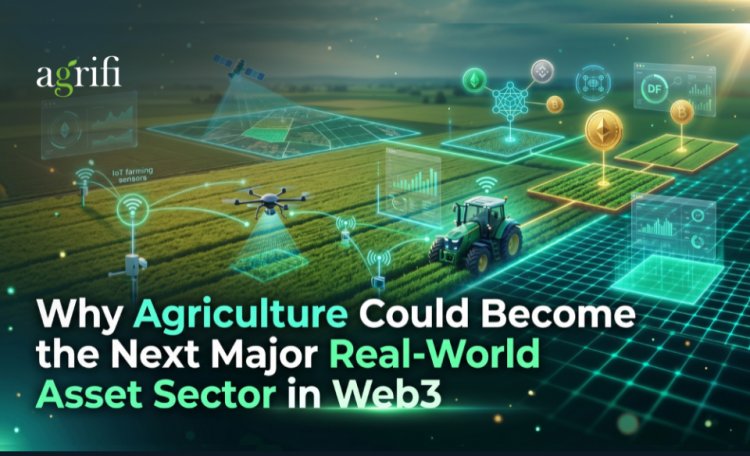
For years, the Real-World Asset (RWA) conversation in Web3 has revolved around tokenized real estate, treasury products, and private credit. But a much larger global industry is now beginning to enter the blockchain economy in agriculture.
And the timing may not be accidental.
Global agriculture is under pressure from every direction:
• climate instability
• rising food demand
• water scarcity
• fragmented supply chains
• increasing operational costs
• declining farm profitability
• lack of financing accessibility in emerging markets
Meanwhile, the blockchain industry itself is undergoing a major transition.
The speculative era that once defined large parts of Web3 is gradually shifting toward infrastructure, utility, and real-world integration. Investors, developers, and institutions are increasingly asking the same question:
What happens when blockchain begins connecting to industries that power the real global economy?
Agriculture may become one of the most important answers.
According to the World Bank, agriculture contributes more than $3.8 trillion to the global economy annually and supports the livelihoods of billions of people worldwide. At the same time, the tokenized RWA sector is projected by multiple industry analysts to potentially grow into a multi-trillion-dollar market over the next decade.
Yet despite agriculture’s massive economic importance, the sector remains one of the least digitally integrated industries globally.
Many agricultural ecosystems still operate through:
• fragmented financial systems
• disconnected supply chain records
• limited traceability
• outdated monitoring infrastructure
• delayed operational insights
• restricted access to global participation models
This gap is creating a new opportunity at the intersection of agriculture, blockchain, AI, IoT, and decentralized finance.
The Rise of Agriculture-Backed Web3 Infrastructure
A growing number of blockchain ecosystems are now exploring how agricultural productivity, supply chain intelligence, and farm-level operational data can integrate into decentralized digital economies.
AgriFi is among the emerging Web3 ecosystems, positioning agriculture as a long-term infrastructure category within the evolving RWA economy.
Built on Polygon, AgriFi integrates:
• blockchain infrastructure
• AI-powered agricultural intelligence
• IoT-connected monitoring systems
• tokenized participation frameworks
• decentralized staking ecosystems
• agriculture-focused digital utility through its ERC-20 AGF Token
Unlike traditional speculative DeFi ecosystems driven primarily by emissions and liquidity cycles, agriculture-backed ecosystems introduce an entirely different layer of utility: connection to real-world food systems, land productivity, agricultural operations, and supply chain ecosystems.
That distinction matters.
Because agriculture is not simply another market sector.
It is one of the foundational systems supporting global economic stability.
Why Agriculture Is Becoming Increasingly Important in Web3
The global agricultural sector is entering a period of structural transformation.
The United Nations estimates the world population could approach nearly 10 billion people by 2050, increasing pressure on food production systems, agricultural infrastructure, and resource management.
At the same time:
• Climate-driven crop disruptions are increasing globally
• Food inflation continues to affect multiple economies
• Water availability is becoming more unpredictable
• fertilizer and logistics costs remain volatile
• global food supply chains are under increasing strain
According to the FAO, approximately one-third of food produced globally is lost or wasted every year, highlighting massive inefficiencies across supply chains and operational systems.
These pressures are accelerating demand for:
• real-time agricultural intelligence
• transparent supply ecosystems
• traceable production systems
• predictive farm analytics
• digitally verifiable agricultural infrastructure
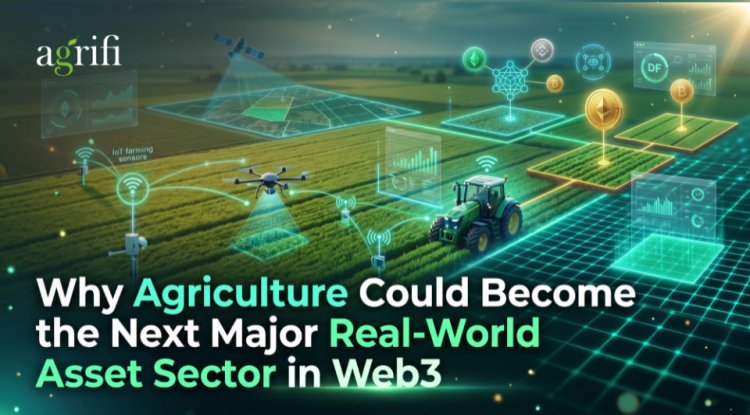
This is where technologies such as AI, IoT, satellite analytics, blockchain verification, and smart contracts are beginning to reshape agriculture itself.
Agriculture Is Becoming a Data Economy
Modern farming is evolving far beyond traditional operational models.
Across global agricultural markets, farms are increasingly integrating:
• IoT soil sensors
• drone-based field monitoring
• satellite crop analytics
• predictive weather systems
• AI-powered yield forecasting
• automated irrigation intelligence
• blockchain-based supply verification
These systems generate large-scale operational data capable of improving:
• crop efficiency
• climate adaptation
• productivity forecasting
• resource optimization
• supply chain transparency
• agricultural risk management
This evolution is turning agriculture into a continuously connected intelligence ecosystem.
And within Web3, data transparency is becoming as valuable as financial participation itself.
Utility Driven Staking Models Are Gaining Attention
Another major shift within decentralized finance is the growing demand for staking ecosystems connected to tangible real-world utility.
Traditional DeFi models often depend heavily on inflationary rewards and speculative liquidity behavior. However, real-world sectors like agriculture introduce a broader utility layer connected to productive economic ecosystems.
Within AgriFi’s ecosystem, AGF Token staking is designed around long-term participation connected to broader agricultural infrastructure development.
The staking framework currently includes:
• 30 Days — 5% APY
• 60 Days — 7% APY
• 90 Days — 9% APY
• 120 Days — 12% APY
• 360 Days — Up to 18% APY
The ecosystem also includes a 2% early withdrawal fee structure aimed at supporting participation stability and long-term ecosystem alignment.

Rather than positioning staking purely around short-term speculative cycles, the ecosystem focuses on utility tied to agriculture-focused blockchain infrastructure and decentralized participation models.
The Infrastructure Phase of Web3
The broader blockchain market is now entering what many analysts consider the “infrastructure phase” of Web3.
The next generation of decentralized ecosystems is increasingly expected to focus on:
• real-world integration
• operational utility
• AI-driven intelligence
• transparent ecosystems
• verifiable data infrastructure
• sector-specific blockchain adoption
Agriculture sits at the center of several of these global priorities simultaneously:
• food security
• sustainability
• supply chain modernization
• climate resilience
• resource optimization
• economic productivity
This convergence is why agriculture is beginning to attract attention as a potentially major long-term category within tokenized real-world assets.
|
“Web3 adoption becomes significantly more valuable when connected to industries with real economic importance and global relevance,” said Veronica Trump, CMO at AgriFi. “Agriculture sits at the center of food systems, sustainability, infrastructure, and global productivity. That makes it one of the most important sectors for the future evolution of blockchain utility.” |
“Blockchain becomes significantly more meaningful when connected to industries that impact everyday global systems like food production and agricultural infrastructure,” said a spokesperson from AgriFi. “The next evolution of Web3 is likely to be driven by ecosystems connected to real productivity, operational transparency, and long-term infrastructure value.”
As blockchain adoption continues expanding beyond purely digital economies, agriculture may ultimately emerge as one of the most strategically important real-world sectors shaping the future of decentralized finance.
About Agrifi
Agrifi is driving an agricultural revolution, harnessing blockchain technology to transform the agricultural supply chain. Our mission is to enhance transparency, efficiency, and sustainability in agriculture while empowering farmers and supporting small-scale agricultural practices.
Join us on this exciting journey to explore the future of agriculture while potentially enhancing the value of your AGF tokens. We’re not just redefining agricultural finance; we’re revolutionizing the future of farming and food production.
Ready to start staking your AGF tokens? Visit our website at https://agrifi.tech/for detailed steps on how to stake your tokens. Compatible wallets include MetaMask, WalletConnect, and Coinbase Wallet. Stay connected with us on Telegram, Twitter, Facebook, and Instagram for the latest updates and community discussions.
Follow Us on:
-
Website: https://agrifi.tech/
-
WhitePaper: https://agrifi.gitbook.io/agrifi-docs
-
Blog: https://blog.agrifi.tech
-
Telegram: https://t.me/agrifi_official
-
Facebook: https://www.facebook.com/agrifiofficial
-
Instagram: https://www.instagram.com/agrifi_official/
-
Twitter: https://x.com/Agrifi_official
-
AGFI listed on: LBank Innovation Zone (AGFI/USDT) LBank

FAQ
Q1: What is AgriFi?
A: AgriFi is a blockchain-based agricultural finance ecosystem built on the Polygon network. It combines farmland tokenization, decentralized finance (DeFi), and AI-powered farming data systems into a unified Web3 platform, all powered by the AGF Token.
Q2: What is the AGF Token?
A: The AGF Token is an ERC-20 token on the Polygon network with a total supply of 7.2 billion tokens. It serves as the economic engine of the AgriFi ecosystem, enabling staking, governance participation, and transactions across the platform.
Q3: How does AgriFi staking work?
A: AGF token holders can lock their tokens for periods ranging from 30 to 360 days. Depending on the chosen lock duration, participants earn an annual percentage yield (APY) of approximately 5% to 18%. Longer lock periods are rewarded with higher APY rates.
Q4: What trading pairs does AgriFi's DEX support?
A: AgriFi's decentralized exchange (DEX) currently supports AGF trading pairs including AGF-USDT, AGF-ETH, and AGF-MATIC, allowing peer-to-peer token swaps directly through smart contracts without the need for a centralized intermediary.
Q5: Can I provide liquidity on AgriFi's DEX?
A: Yes. Users can deposit token pairs such as AGF-USDT, AGF-ETH, or AGF-MATIC into AgriFi's liquidity pools. In return, liquidity providers receive LP tokens representing their pool share and earn a portion of the trading fees generated on the platform.
Q6: How does AgriFi use AI and IoT in agriculture?
A: AgriFi integrates artificial intelligence and IoT-based monitoring systems to collect and analyze real-time agricultural data, including soil conditions, crop performance, and environmental factors. These insights support more transparent, efficient, and data-driven farming decisions.
Q7: What blockchain does AgriFi run on?
A: AgriFi is built on the Polygon network using the ERC-20 token standard. Polygon was chosen for its low transaction fees, fast processing speeds, and compatibility with Ethereum-based decentralized finance infrastructure.
Q8: What is farmland tokenization?
A: Farmland tokenization is the process of converting physical agricultural land assets into blockchain-based digital ownership structures. This makes farmland more transparent, accessible, and liquid, allowing broader participation beyond traditional geographic and financial limitations.
Q9: Where can I stake my AGF tokens?
A: You can stake your AGF tokens directly through the AgriFi platform at agrifi.tech. Full staking instructions and details are available on the website.
What's Your Reaction?